Ask any Nigerian landlord how rent comes in and you will get the same story: a transfer here, a cash drop-off there, an MFB receipt screenshot on WhatsApp, and the occasional "boss, I will send tomorrow" that becomes next week. There is a better way. Below are the five most common methods to collect rent online in Nigeria, with honest pros and cons for each.
1. Direct bank transfer
The simplest option, and still the most common. You give the tenant your account number; they send the money.
Pros: Zero fees on the inbound side (for most personal and SME accounts). Instant settlement with NIP (NIBSS Instant Payment). Tenants already know how to do it.
Cons: You have to manually reconcile every single payment. If three tenants pay on the same day, you are matching names and amounts by hand. No automated receipts, no reminders, no record of who owes what. As soon as you have more than two or three units, this becomes a part-time job.
2. Paystack or Flutterwave payment links
You generate a unique payment link for each tenant or each invoice. The tenant clicks it, pays by card, transfer, or USSD, and you get a confirmation.
Pros: Automated email or SMS receipts, a dashboard of paid versus unpaid, multiple payment methods in one place. Refunds and reconciliation are vastly easier than raw bank transfers.
Cons: A processing fee per transaction (typically a low single-digit percentage, capped). For a one-million-naira annual rent that is a real number, so most landlords either absorb it as a cost of doing business or build it into the rent quote. Still no built-in tenant or property tracking. Payment links are a payment tool, not a property tool.
3. USSD codes
Tenants dial a short code on their phone (no app, no data, no card) and complete the payment from their bank account.
Pros: Works on any phone, including non-smartphones. Reliable in low-connectivity areas. Tenants who do not trust apps will trust USSD because their bank built it.
Cons: Per-transaction limits are tight, which is a problem for annual rent payments that can run into seven figures. You will often need to split a payment across days, which makes reconciliation messier, not easier. Best used as a backup option, not your primary rail.
4. Property management apps
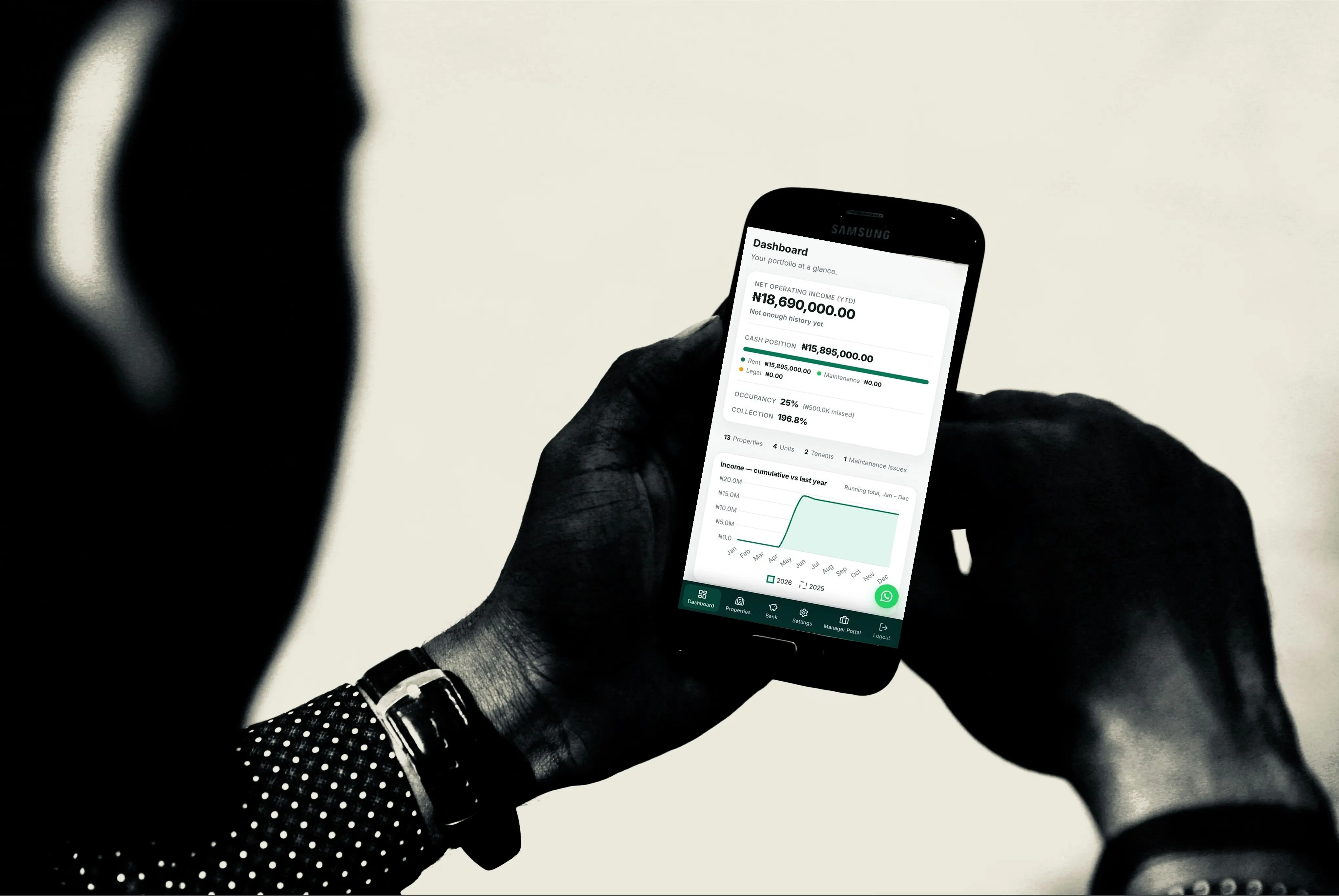
A dedicated platform like Xtate turns rent collection into one piece of a larger system. The tenant gets reminders, pays through their preferred method (card, transfer, USSD), and the payment is automatically matched to their unit, their lease, and their month. You see one dashboard for every property.
Pros: Automated reminders before due dates and after. Automatic receipts. Auto-reconciliation by tenant and unit. Arrears reporting that is actually accurate. Payment processor fees are similar to using Paystack directly, but you avoid the manual work entirely. WhatsApp and SMS notifications keep your tenants in the loop without you lifting a finger.
Cons: A monthly or per-unit software fee on top of the payment processor fee. For one or two units, that fee is hard to justify. For five or more, it usually pays for itself within the first month in saved time and recovered arrears.
5. Standing orders and direct debits
The tenant authorises their bank to send a fixed amount to you on a recurring schedule, typically monthly.
Pros: Once set up, it runs itself. No reminders needed, no chasing.
Cons: Adoption is low in Nigeria for rent specifically. Tenants are nervous about letting a fixed debit pull from their account, and most leases here are annual or quarterly, which makes monthly debits a poor fit. Cancellation is also tenant-controlled, so if a tenant ends the order, you might not know until you check your statement. Better for service charge or smaller recurring fees than for full rent.
Side-by-side comparison
| Method | Speed | Fees | Reconciliation | Tenant friction |
|---|---|---|---|---|
| Bank transfer | Instant | None | Manual | Low |
| Paystack / Flutterwave | Same day | Per transaction | Semi-automated | Low |
| USSD | Instant | Small flat fee | Manual | Very low |
| Property mgmt app | Same day | Software + processor fee | Automatic | Low |
| Standing order | On schedule | None or small | Manual | Medium |
So which one should you use?
For one or two units, direct bank transfer combined with personal discipline is fine. For three to four units, payment links from Paystack or Flutterwave start to make sense. For five or more units (or any portfolio where you have a manager, multiple properties, or maintenance to track), a dedicated platform to manage your tenants and rent in one place is the only thing that scales without driving you mad.
The cheapest rent-collection method is the one you actually use consistently. A free bank transfer that leaves you with 40% unreconciled is more expensive than a 1.5% processor fee on a clean ledger.
One more thing: receipts and records
Whatever method you choose, send a receipt for every payment, immediately. It builds trust, it kills disputes before they start, and it keeps your tax records clean. If you are also screening prospective tenants seriously (and you should be), pair your collection method with a proper tenant verification process so you know who you are taking money from in the first place.
Related reading
- Property Management Software in Nigeria: A Landlord's Guide for 2026
- Property Management Software vs Spreadsheets: The Real Cost
Pick the method that matches the size of your portfolio today, but also plan for the one you will need a year from now. Rent collection is the heartbeat of your real estate business. Get it right and everything else gets easier.